What we do



It is consumed by fire and created anew from ashes. The disruptive effect of AI in large parts of the labor market is unfolding like a devastating fire that burns jobs. Job starters in particular are finding it increasingly difficult to even get a foot in the door. A study by McKinsey (2025) assumes that 27% of weekly working time in Europe can be automated. A survey by TU Darmstadt from 2025 (N = around 2,000 employees) shows that employees who are very familiar with AI have a much more pronounced fear of jobs being lost on a larger scale. Nevertheless, the study also shows that the majority of respondents see no threat to their jobs in the next five years, although all respondents understand that AI can lead to job losses.
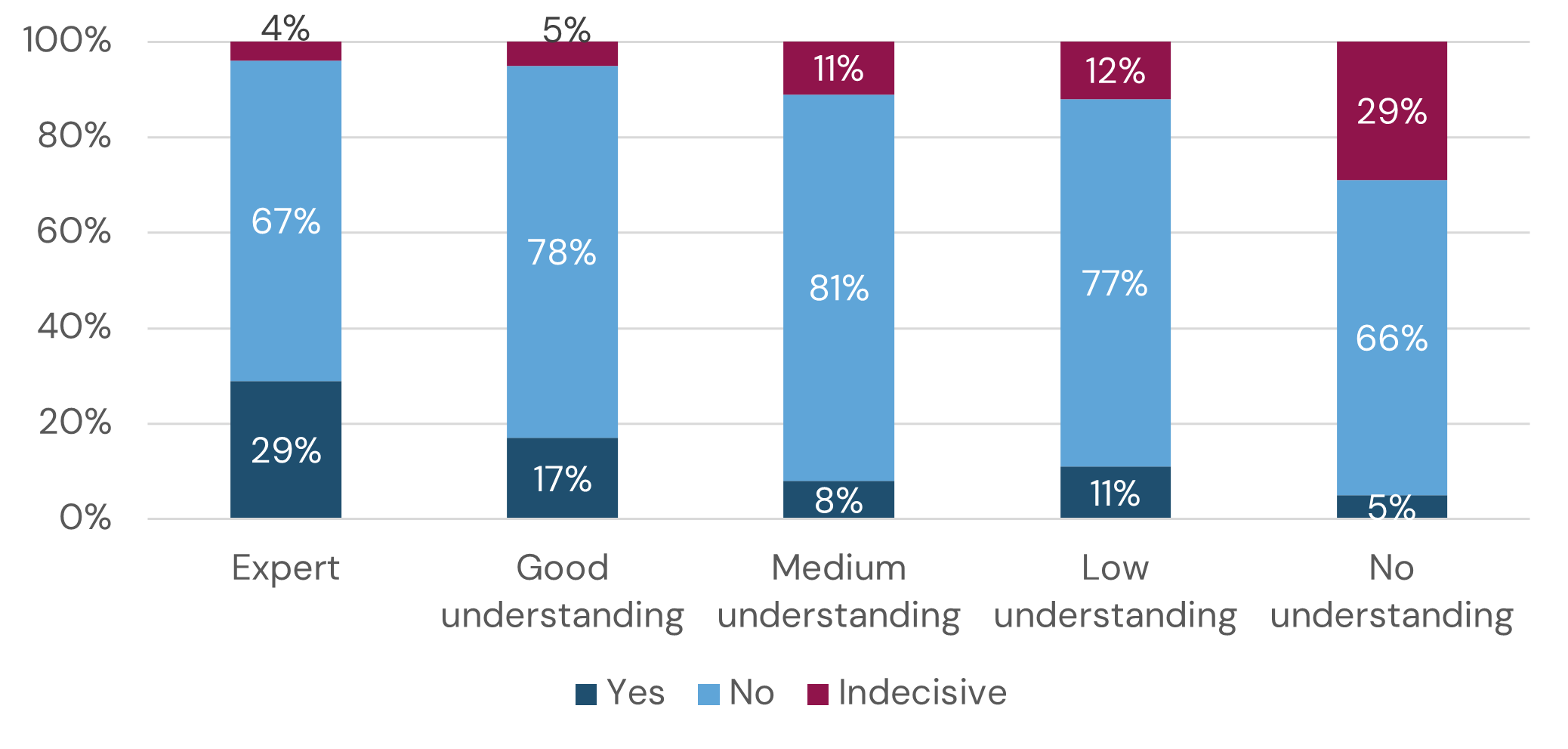
This is commonly referred to as “cognitive dissonance reduction.” In the short term, “not admitting” the current risk of job loss due to AI may lead to improved well-being. In the medium to long term, however, competitiveness decreases due to missed (continuing) training. This is the most important first step for every trainee, student and employee: In which areas of my professional activity can artificial intelligence replace my own activities? This question necessarily leads to the “rabbit hole” and to a change in your own mindset.
New job opportunities will arise from the ashes! The labor market is currently undergoing a massive transformation, which can cause a temporarily precarious situation for job entrants and for people in jobs that can be heavily substituted by AI. To master this transition, companies are pursuing differentiated strategies. While hiring new talent is currently focused primarily in highly qualified areas, the focus is on internal training for using AI. Since the transition from manual tasks to complex IT skills is extremely time-consuming, according to the McKinsey study (2025), almost half of companies rely on their own in-house training and mentoring to make their workforce fit for the new reality by 2030. Below, Fit4Prax provides an overview of selected skills that already play an important role in many job profiles today and in the future.
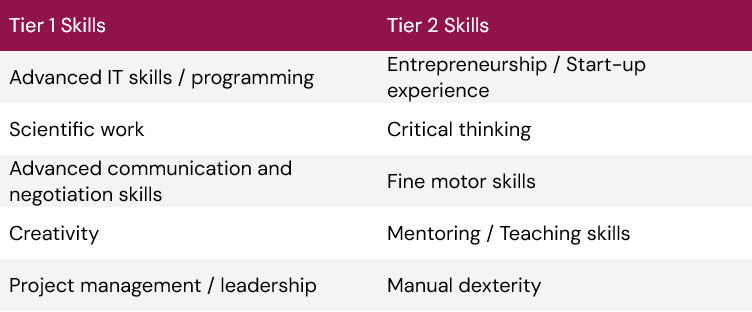
For people who are already employed, it is possible to learn the necessary skills on the job. In addition to the above question of how much AI can automate my daily work, the following question is “What tasks can I perform through AI in the first place and what added value does that have for the company? “also highly relevant. Young professionals, in particular those looking for a job in the course of 2026, should ask themselves, among other things, which job activities cannot be covered by AI. Here, the Job Futuromat from the Institute for Labour Market and Vocational Research can help identify occupational fields that have a low level of automation. For example, the job “financial accountant” is listed as 100% automatable in the next 3 years. The same was true for the job of “tax specialist” over the course of 2025. However, the Federal Chamber of Tax Consultants has ordered a reassessment of this profession at the end of 2025, as new activities with digital processes and communication skills have now been integrated into the list of the main activities in this job. As a result, the automation capability indicator has fallen to 50%. This example shows how volatile the current situation is, as it is hardly possible to make a reliable forecast in the current market dynamics and the enormous speed of AI development. Nevertheless, you should look at the 50% of automatable activities, as it is quite clear here that data-intensive activities (bookings, table processing, etc.) remain considered very likely to be replaced by AI. Overall, however, this example shows that less is true “Humans are being replaced by AI” rather than “The person without AI will be replaced by the person with AI”. In this respect, it is shown here that all people in the labor market, both beginners and experienced professionals, must deal with AI as a support or assistant in their work in order to remain competitive. Personal initiative in dealing with AI is becoming a strategic duty!
This obligation to take initiative is also illustrated by the so-called “AI paradox” in the German educational landscape: While artificial intelligence has long since become the standard in professional practice, educational concepts and infrastructure are massively lagging behind this development. At universities, this is reflected in a significant discrepancy between strategic requirements and practical implementation: According to the AI Monitor 2025, over 80% of managers regard graduates as insufficiently prepared, as essential “future skills” and the legal adjustment of study and examination regulations in”strategic traffic jam“Get stuck, which results from a very time-consuming decision-making process. In order to make a significant change to a degree program, adjustments must be made by study commissions, faculty councils and accreditation bodies. A process that often takes 2 to 4 semesters (i.e. 1 to 2 years). At the current rate of development of future skills, this slow adaptability is leading to an ever greater “strategic traffic jam.”
The situation is even more precarious at vocational schools, where a growing”Digital Divide“Training slows down. Here, outdated curricula, inadequate technical equipment and pronounced uncertainty on the part of teachers prevent the modern teaching of digital skills. As a result, Germany is one of the lowest places in an international comparison of “AI literacy.” Since teaching is often still focused on regulation rather than on the productive use of AI, the necessary qualification of tomorrow's specialists currently falls far short of market requirements.
In conclusion, it can be stated that although AI is displacing traditional job profiles, this process represents not so much a general job loss as a market-selective shift: While jobs disappear for those who reject the use of new technologies, this transformation creates new career opportunities for specialists who have mastered AI as a tool. In Germany, the disruptive effect of AI — i.e. the risk of fewer new hires through efficiency gains — is paradoxically caused by demographic change (Broad shoulders, slim feet) cushioned. The “broad shoulders” of the baby boomer generation are retiring and leaving a gap that the “narrow-footed” offspring alone cannot fill, meaning that AI is more likely to compensate for the labor shortage here. Yet this remains a challenge for the social system, as algorithms make no contributions to pension insurance. In order to fill this financial deficit, the Federal Government is currently increasingly discussing the introduction of a so-called “robot tax” to make value creation through automated systems usable for the common good. In September 2025, the Scientific Service of the German Bundestag published a comprehensive report on this subject entitled “Aspects of a Value Added Tax or Tax.”